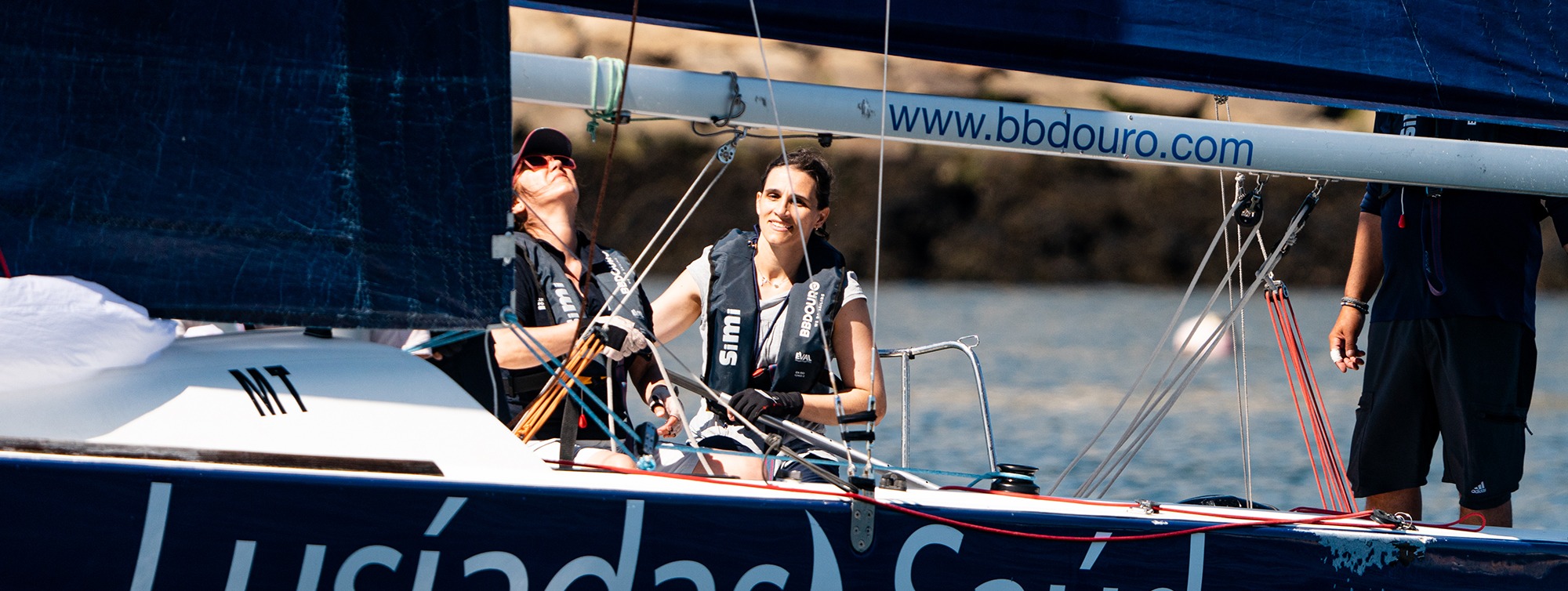
Starting to sail is like entering a new world — full of terminology, challenging maneuvers, and plenty of discoveries. But don’t worry: all great sailors started out this way, with doubts, stumbles, and good stories to tell.
And to help you embark on this adventure on the right foot (or with the right helm), we’ve gathered three essential tips shared by our skippers — who live the sea every day and know exactly what it means to start from scratch and fall in love with this sport.

If there’s one thing that sets beginners apart from those who’ve spent many hours at sea, it’s how they refer to what might at first seem like a simple rope. On a boat, there are no ropes. There are lines — each with its own name and function, and using the correct terminology is part of the language of sailing.
Knowing nautical terms is essential to understand instructions on board and act quickly during maneuvers — halyards are used to hoist the sails, and sheets control how much they open. It may seem complicated, but with practice and a bit of persistence, you’ll see it all starts to make sense.

It may seem simple, but it’s a quick and effective way to understand how to use the helm in the first lessons. In the heat of the moment, when the skipper needs to give immediate instructions, “push” or “pull” is the most direct way to communicate with someone still learning. However, in sailing, what we’re really doing with the helm is heading up (luffing) or bearing away.
So, memorize this mantra: Head up, push away. Bear away, pull in. In other words, if you push the helm away from you, the boat heads up; if you pull it toward your belly, the boat bears away.
Learning these terms from the start will help you better understand the boat’s movements, react with more confidence during maneuvers, and develop the essential rhythm to blend naturally on board.

If sailing teaches anything, it’s that appearances can be deceiving. A clear sky and bright sun can hide a chilly northerly wind strong enough to give even the most experienced shivers. And the opposite can happen too: a cloudy day can bring the perfect wind for a memorable experience.
The wind is the true engine of sailing — with it you sail, without it you drift. So, more than the sun or the clouds, what matters is whether there’s enough wind… and if you’re dressed appropriately.
The tip is simple: always check the forecast before heading out and wear appropriate clothing. Dress in layers, preferably technical gear that can get wet, and never go without a good windbreaker. This way, you ensure comfort on board and can focus on what really matters: sailing.
Sailing is an exciting sport where every detail matters — and every mistake is an opportunity to learn. If you follow these three tips, you’ll avoid the classic beginner errors.
Trim the sail and come aboard with us!